Praseodymium profile
USGS annual data · updated 2026-11-12 · next USGS release Jan–Feb 2027
Praseodymium is a light rare earth element that occurs together with neodymium in bastnaesite and monazite ores.
Research
- NdPr oxide fell 56% from its 2022 peak, but China's heavy rare-earth licences split prices 12 Nov 2026
What is praseodymium?
Praseodymium is a light rare earth element that occurs together with neodymium in bastnaesite and monazite ores. It is often sold blended with neodymium as NdPr oxide for magnets.
On the US 2025 critical minerals list.
What is praseodymium used for?
- Neodymium-praseodymium magnets for EV motors
- Wind turbine generators
- Aircraft engine alloys
- Glass and ceramic colouring
- Welding goggles glass
Who produces praseodymium?
It is reported within total rare earths. China dominates mining and separation.
Supply risks
Supply is tied to wider rare-earth mining, and China controls most separation capacity. Praseodymium can partly substitute for neodymium in magnets, but both come from the same ores.
Praseodymium price history in brief
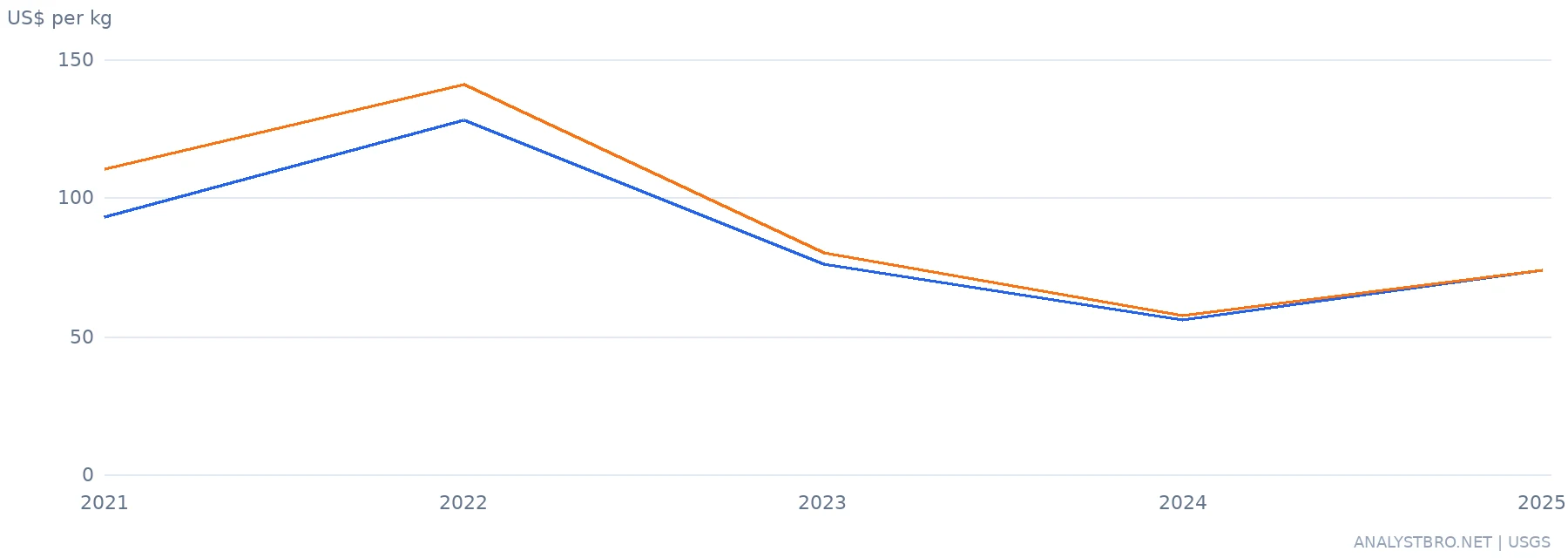
The USGS praseodymium oxide price was $93 per kg in 2021 and peaked at $128 in 2022. It fell to $56 in 2024 and the 2025 USGS estimate is $74 per kg.
Why it matters for Bangladesh
Bangladesh imports praseodymium inside electric motors, fans and electronics.
Frequently asked questions
What is the price of praseodymium per kg?
The USGS estimate for 2025 is about $74 per kg for praseodymium oxide.
Who is the largest producer of praseodymium?
China; USGS reports it within total rare earths.
Is praseodymium a critical mineral?
Yes, as part of the rare earth elements.
What is praseodymium used for?
Mainly NdPr permanent magnets, plus alloys and glass colouring.
Why did praseodymium prices rise in 2025?
The USGS estimate rose from $56 to $74 per kg amid tighter Chinese controls on rare earths.
Related commodities
Neodymium · Rare earths · Dysprosium · Terbium
- Source: U.S. Geological Survey, Mineral Commodity Summaries 2026 data release (doi:10.5066/P1WKQ63T) and Data Series 140, Historical Statistics for Mineral and Material Commodities (USGS). Public domain. 2025 values are USGS estimates (marked e).
- Facts only, not investment advice.