Tungsten profile
USGS annual data · updated 2026-11-12 · next USGS release Jan–Feb 2027
Tungsten is a dense metal with the highest melting point of any metal.
Research
What is tungsten?
Tungsten is a dense metal with the highest melting point of any metal. It is mined from wolframite and scheelite ores, concentrated, and processed into ammonium paratungstate, oxide, powder and tungsten carbide.
On the US 2025 critical minerals list.
What is tungsten used for?
- Cemented carbide cutting and drilling tools
- Mining and construction wear parts
- High-speed and tool steels
- Defense penetrators and ballast
- Electronics and lighting filaments
- Radiation shielding
Who produces tungsten?
In 2025 (USGS estimate) China produced 67,000 metric tons, about 79% of world mine production of 85,000 metric tons. Next came Vietnam (4%), Kazakhstan (3%). USGS puts world mine production at 85,000 metric tons in 2025. China holds about 53% of the reserves listed by USGS (2.5 million tons), followed by Australia and Russia; China is also by far the largest miner.
Supply risks
China restricts tungsten exports through licensing, and added further controls in 2025, so non-Chinese supply is limited. Recycling of carbide scrap provides some supply, but substitutes perform worse in most uses.
Tungsten price history in brief
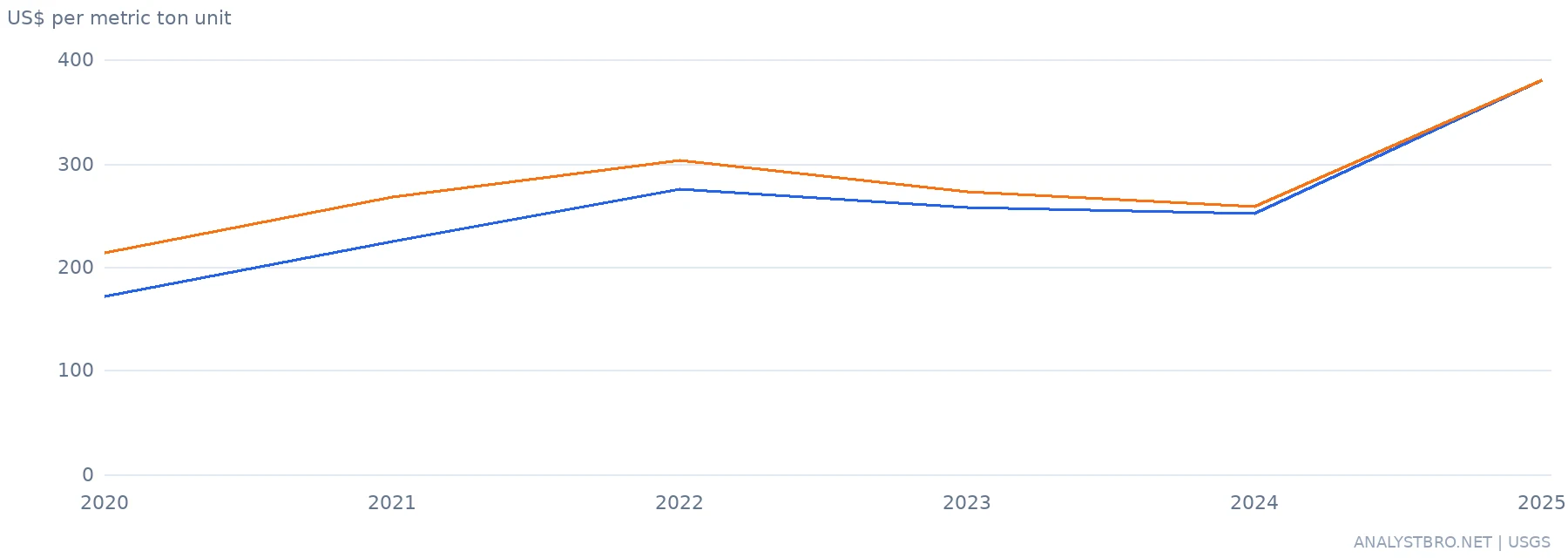
The USGS price for tungsten concentrate (Rotterdam, per metric ton unit of WO3) was $225 in 2021 and $252 in 2024. The 2025 USGS estimate is $380, the highest in the series and about 69% above 2021.
Why it matters for Bangladesh
Bangladesh has no tungsten mining; It imports carbide tools and drill bits used in construction and manufacturing.
Frequently asked questions
What is the price of tungsten?
The USGS estimate for 2025 is $380 per metric ton unit of tungsten trioxide in concentrate.
Who is the largest producer of tungsten?
China: 67,000 metric tons in 2025, about 79% of world mine production (USGS estimate).
Is tungsten a critical mineral?
Yes. Tungsten is on the U.S. Critical minerals list.
What is tungsten used for?
Mostly tungsten carbide for cutting tools and wear parts, plus steels and defense uses.
Related commodities
Molybdenum · Cobalt · Antimony · Niobium
- Source: U.S. Geological Survey, Mineral Commodity Summaries 2026 data release (doi:10.5066/P1WKQ63T) and Data Series 140, Historical Statistics for Mineral and Material Commodities (USGS). Public domain. 2025 values are USGS estimates (marked e).
- Facts only, not investment advice.