Iron ore profile
USGS annual data · updated 2026-11-12 · next USGS release Jan–Feb 2027
Iron ore is rock rich in iron oxides, mainly hematite and magnetite.
Research
What is iron ore?
Iron ore is rock rich in iron oxides, mainly hematite and magnetite. Almost all of it is used to make pig iron in blast furnaces or direct reduced iron, the first step in making most of the world's steel.
What is iron ore used for?
- Blast furnace pig iron
- Direct reduced iron (DRI)
- Pellets and sinter feed
- Heavy media and cement additive
Who produces iron ore?
The USGS estimates world usable iron ore production at about 2.6 billion metric tons in 2025, the same as in 2024. Crude ore reserves are largest in Australia (59 billion tons), Russia (35 billion), Brazil (34 billion) and China (17 billion). Australia and Brazil are the largest exporters and China is the largest importer.
Supply risks
Seaborne trade depends heavily on Chinese steel output, so Chinese property and construction cycles move prices. Supply is concentrated in a few large mining companies.
Iron ore price history in brief
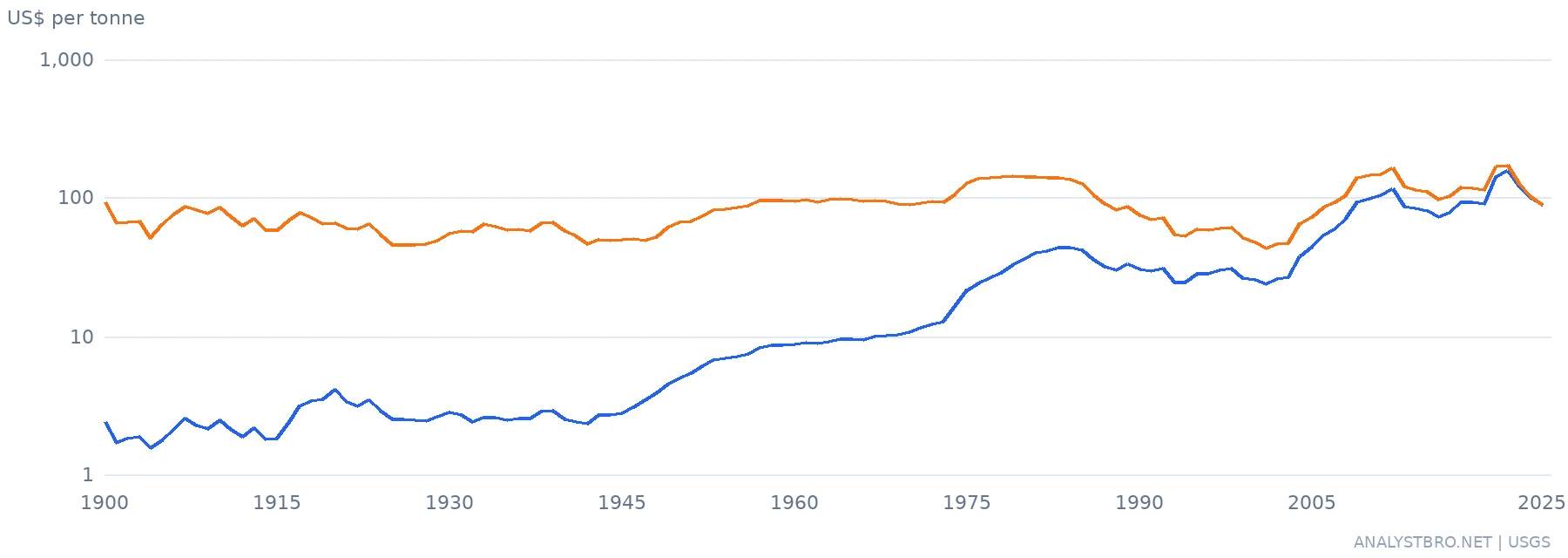
The USGS average mine unit value is estimated at $89 per ton in 2025. The series peak was $156.42 in 2022, about $172 in 2025 dollars. The 1900 value of $2.42 equals about $94 today, so the real price is about 5% lower than in 1900.
Why it matters for Bangladesh
Bangladesh has no iron ore mining and no blast furnace steel industry. Local steel is made mainly by melting scrap and imported billet, so iron ore matters indirectly through world steel and scrap prices that affect rebar makers such as BSRMSTEEL and GPHISPAT.
Frequently asked questions
What is the iron ore price per ton?
The USGS estimates the average US mine unit value at $89 per metric ton in 2025.
Which country has the largest iron ore reserves?
Australia, with 59 billion tons of crude ore reserves in the USGS data, followed by Russia and Brazil.
Iron ore price history
Iron ore was $2.42 per ton in 1900 and peaked at $156.42 in 2022; The 2025 estimate is $89.
Why does iron ore matter for Bangladesh?
Bangladesh does not use iron ore directly, but iron ore prices move world steel and scrap prices that local rebar makers pay.
Related commodities
Iron and steel scrap · Manganese · Nickel · Zinc
- Source: U.S. Geological Survey, Mineral Commodity Summaries 2026 data release (doi:10.5066/P1WKQ63T) and Data Series 140, Historical Statistics for Mineral and Material Commodities (USGS). Public domain. 2025 values are USGS estimates (marked e).
- Facts only, not investment advice.