High-purity quartz profile
USGS annual data · updated 2026-11-12 · next USGS release Jan–Feb 2027
High-purity quartz is silica with very low levels of impurities, processed from rare pegmatite deposits or grown synthetically as cultured quartz.
What is high-purity quartz?
High-purity quartz is silica with very low levels of impurities, processed from rare pegmatite deposits or grown synthetically as cultured quartz. It is used where ordinary sand is not pure enough.
What is high-purity quartz used for?
- Crucibles for growing silicon crystals for chips and solar
- Semiconductor fabrication components
- Cultured quartz for frequency-control oscillators
- Optical fibre and specialty glass
- Lighting and optics
Who produces high-purity quartz?
A small number of deposits supply most of the highest grades, with the Spruce Pine district in North Carolina, USA, widely known as a key source.
Supply risks
Concentration in a few deposits makes supply vulnerable to disruption, as shown when Hurricane Helene closed Spruce Pine mines in 2024. Substitutes for the highest purities are limited.
High-purity quartz price history in brief
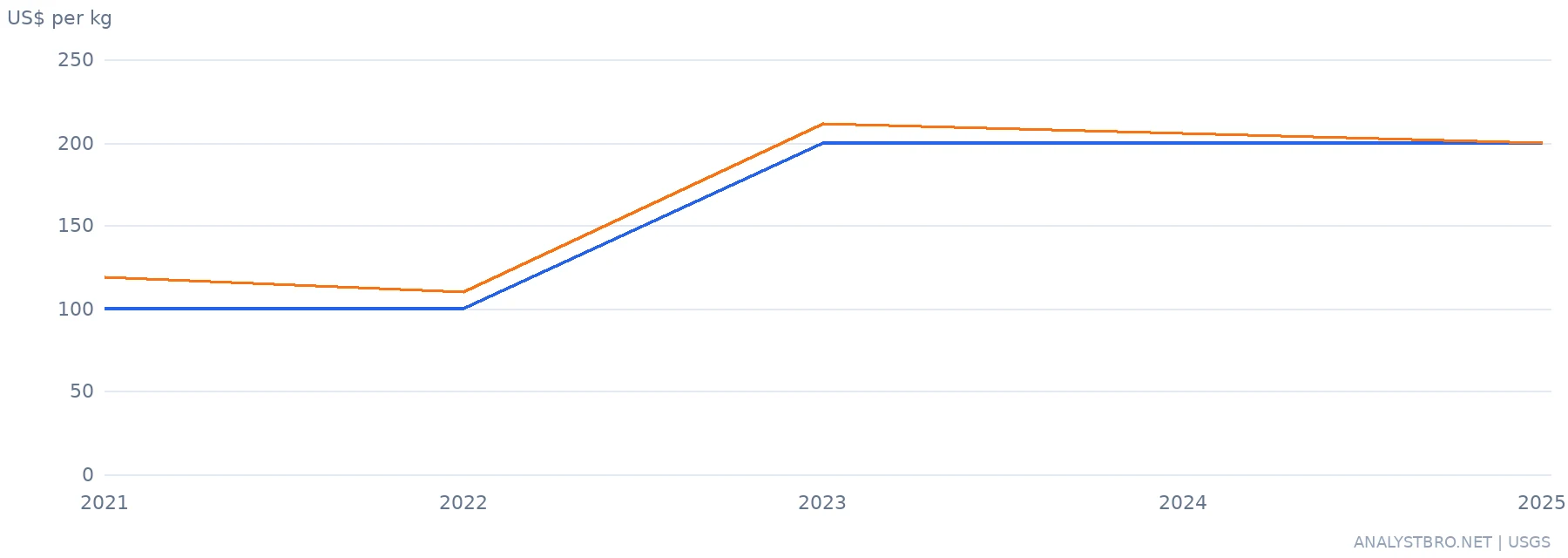
The USGS price for as-grown cultured quartz is an estimate of $100 per kg in 2021, rising to $200 per kg in 2023. The 2025 USGS estimate is unchanged at $200 per kg; All years in the series are estimates.
Why it matters for Bangladesh
Bangladesh does not produce high-purity quartz; It is embedded in imported chips, solar panels and electronic oscillators.
Frequently asked questions
What is the price of high-purity quartz?
The USGS estimate for as-grown cultured quartz is about $200 per kg for 2025.
Where does high-purity quartz come from?
A few deposits, notably Spruce Pine in the US, plus synthetic cultured quartz.
What is high-purity quartz used for?
Crucibles for silicon crystal growth, chip-making parts, oscillators and optical fibre.
Why is high-purity quartz important for semiconductors?
Silicon ingots for chips and solar wafers are grown in high-purity quartz crucibles, so impurities would contaminate the silicon.
Related commodities
Silicon · Gallium · Germanium · Zirconium
- Source: U.S. Geological Survey, Mineral Commodity Summaries 2026 data release (doi:10.5066/P1WKQ63T) and Data Series 140, Historical Statistics for Mineral and Material Commodities (USGS). Public domain. 2025 values are USGS estimates (marked e).
- Facts only, not investment advice.